Every job below is one we do ourselves across Greenfield.
We set posts below Wisconsin's frost line, 42 inches down, so the deck doesn't heave every spring. Joists go in at 16 inches on center for most decking, tighter at 12 inches if you want composite or a picture-frame border. We flash the ledger board where it meets the house, because that's the spot that rots first if water gets behind it.
Most repair calls start with a soft spot in the decking or a railing that wiggles when you lean on it. We pull up the bad boards, check the joists underneath for rot, and only replace what's actually failed instead of tearing off the whole deck. A loose railing post usually means the fasteners have pulled out of wet wood, and we re-anchor it with structural screws into solid framing.
Pressure-treated lumber has to dry out for a season before it'll take stain properly, so we check moisture content before we start. We pressure wash first to open the wood grain, let it dry a couple days, then apply a semi-transparent stain that lets you still see the grain. Plan on redoing this every two to three years in our climate, sooner on a deck that gets full south sun.
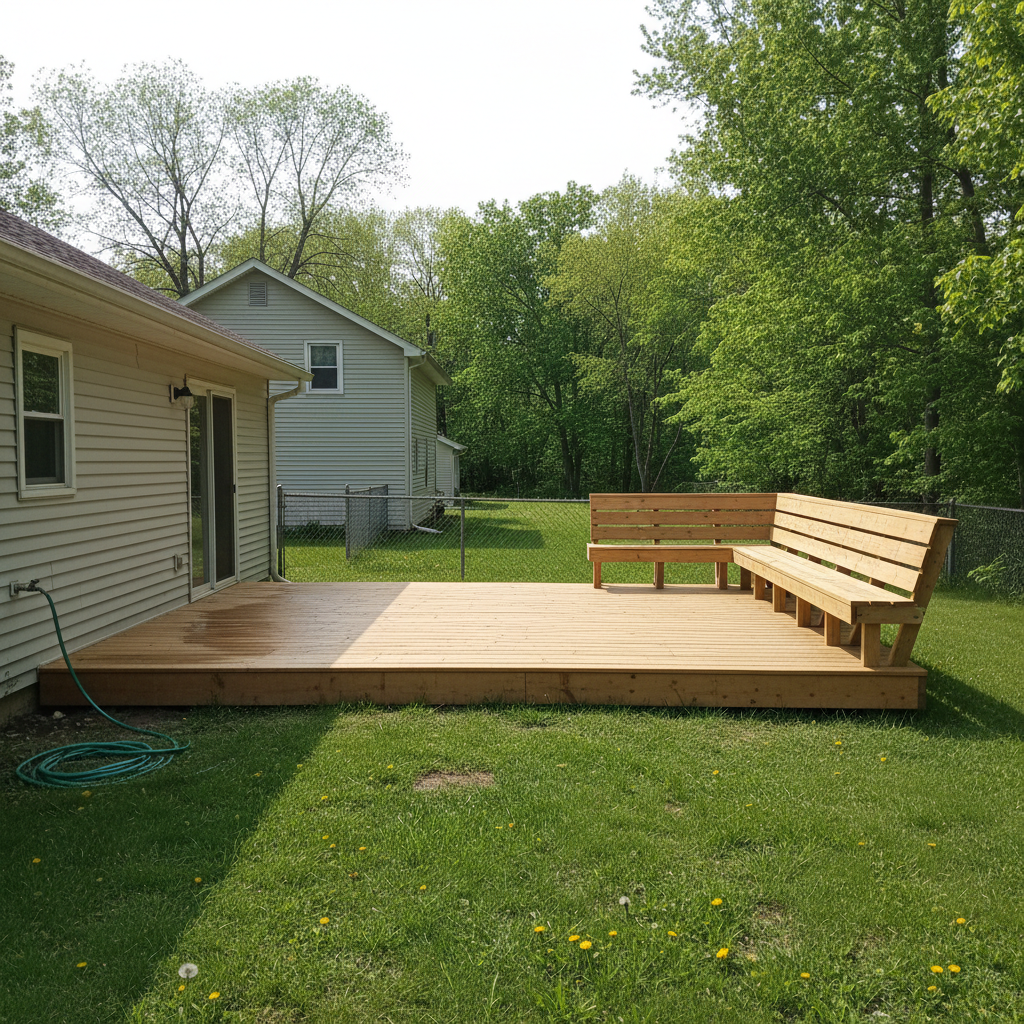
Some decks have to wrap around an existing tree or step down to match a sloped yard, and that's where stock plans stop working. We draw up the layout with you, figure out where the stairs land and how the railings meet code, then build to that plan instead of making it up as we go. Multi-level decks and built-in benches start here, on paper, before any lumber shows up.
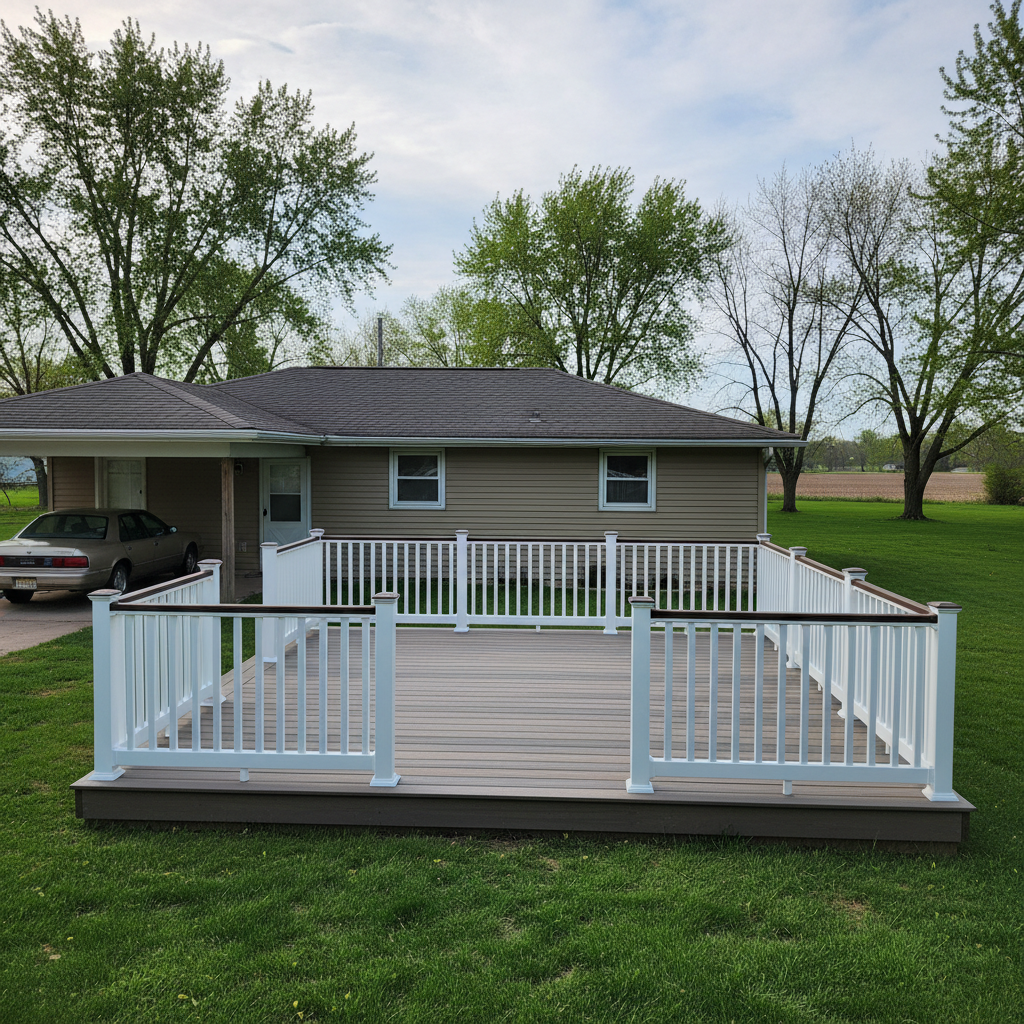
Composite boards expand and contract more than wood with temperature swings, so the gapping and fastening pattern has to account for that or you get waviness by year two. We run hidden fastener systems on most composite jobs so the deck surface has no visible screw heads. It costs more up front than pressure-treated, but there's no staining and no sealing, ever.
Wisconsin code requires 36-inch railing height on most residential decks and baluster spacing that won't let a 4-inch sphere through, and we build to that spec whether it's a repair or a new installation. Wobbly railings are almost always a post that was only toe-nailed instead of bolted through the rim joist. We re-bolt it with lag screws and through-bolts so it stays tight.
If the frame underneath is still solid but the decking boards are splintered, cupped, or gray from years of sun, resurfacing saves you the cost of a full rebuild. We strip off the old boards, check every joist for soft spots, and lay new decking on the existing structure, usually finishing in two to three days.
Old decks come down fast once you know what's holding them up, usually bolts through the ledger and a handful of footings. We haul away every board and fastener and check the ledger flashing on the house before we leave, since that's often why the old deck failed in the first place.
A pergola attached to an existing deck needs its own posts and footings, it can't just hang off the deck framing. We size the rafters for snow load, not just looks, since a flat-topped pergola will hold snow all winter here. Cedar and treated pine are the two options we build in most often.
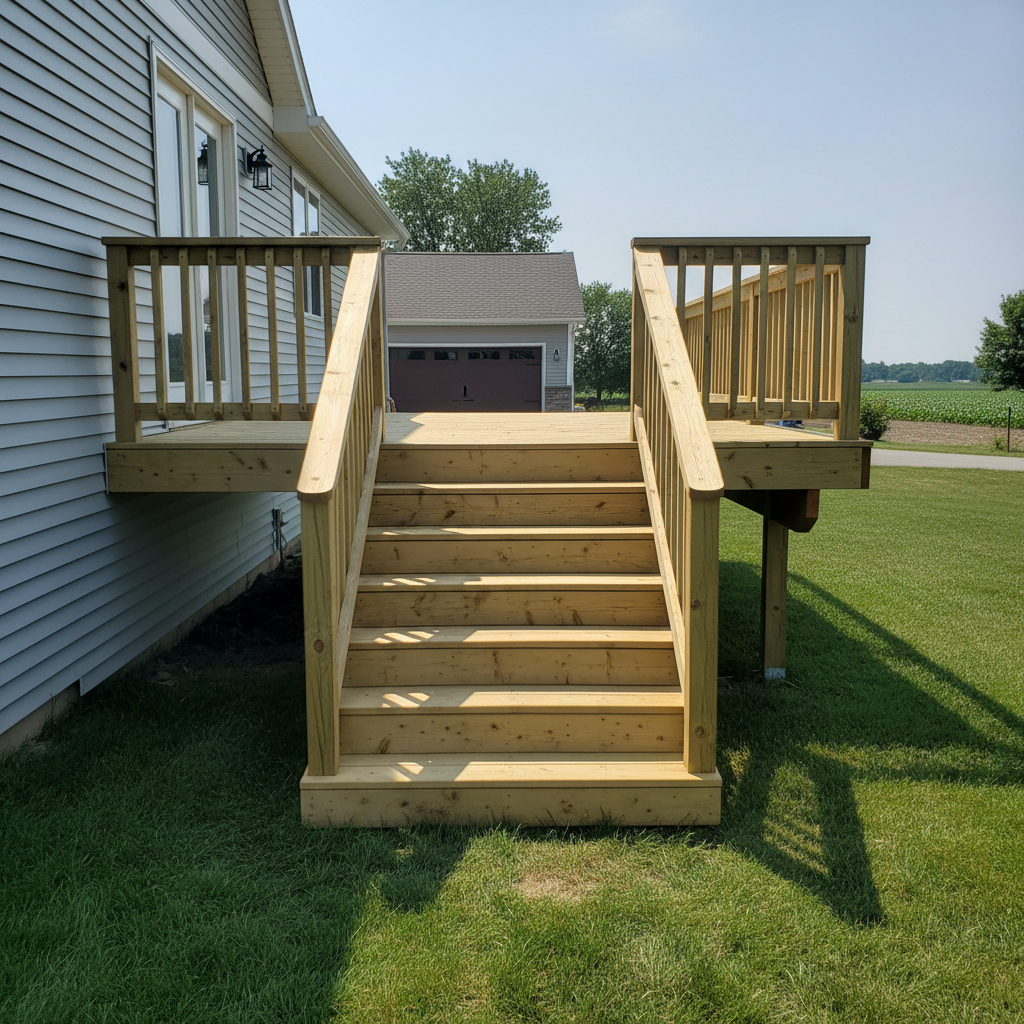
A sloped backyard usually means stairs and a second level instead of one flat deck, and the framing gets more complex fast. We step the footings down with the grade and tie the levels together with stairs that meet the same rise-and-run on every step, which is a code requirement and also just safer to walk. These jobs take longer than a single-level deck, usually an extra week.
Four steps, and no surprises in any of them.
You tell us what you want doing, we look at what is actually there, and we ask the awkward questions early.
In writing, itemised, free. If something might add cost later we flag it now rather than at the end.
Same crew throughout. We cover your floors, keep the dust down and tidy up before we leave each day.
You point out anything you are not happy with and we fix it before the invoice, not after.
Serving homeowners across these communities within about an hour of Greenfield.
Questions that come up once a deck project actually gets underway.
Describe the problem and we will tell you what it probably is. No obligation.